Stinging Insect Control in Portland Metro & the Willamette Valley.
Wasp, Yellowjacket & Bald-Faced Hornet Services
Protect your home, family, employees, and customers from aggressive stinging insects with professional service from OutLook Pest Management. We provide one-time stinging insect treatments and ongoing maintenance services throughout the Portland Metro area and the Willamette Valley, helping reduce nests around homes, businesses, sheds, garages, eaves, play areas, and other high-traffic spaces.
Stinging insects become most active in summer and early fall, when colonies are larger, food sources are abundant, and defensive behavior increases. Yellowjackets are usually the most troublesome because they can nest underground, inside wall voids, or around structures and may become more aggressive as the season progresses.
Stinging Insects Common in the Portland Metro & Willamette Valley
In the Portland Metro and Willamette Valley area, the stinging insects people most often notice around homes and businesses are
paper wasps,
yellowjackets, and
bald-faced hornets. These insects are all social wasps in the family Vespidae, but they behave differently, build different nest types, and vary in how defensive they are when disturbed.
Paper Wasps
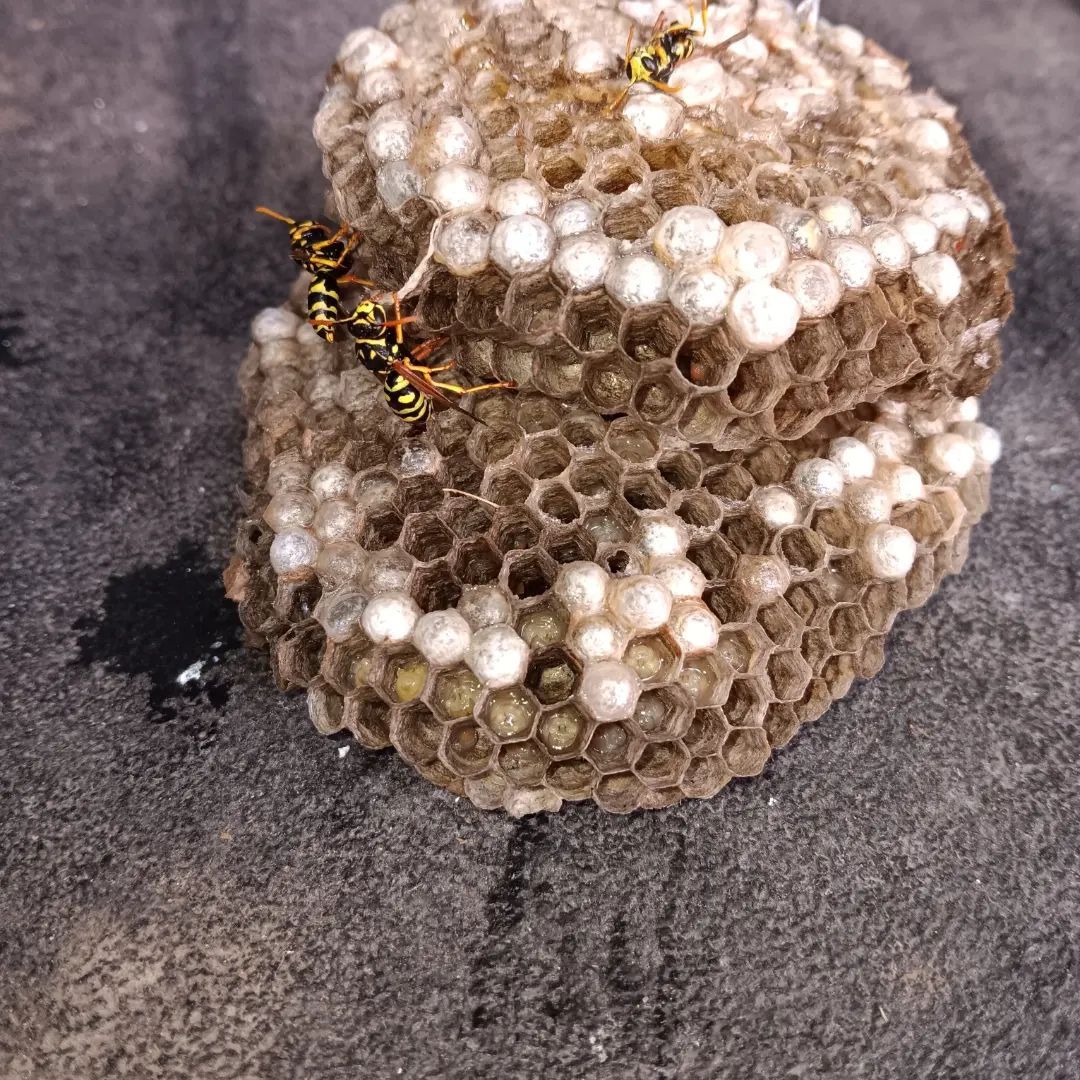
Paper wasps are slender wasps with long legs and an obvious narrow waist. They typically build small open-cell umbrella-shaped nests under eaves, porch ceilings, awnings, attic openings, branches, vines, and other sheltered areas. Paper wasps are usually less aggressive than yellowjackets, but they can still sting when nests are disturbed or when they are built near entryways and high-traffic areas.
Yellowjackets
Yellowjackets are among the most problematic stinging insects in Oregon because they often build nests in rodent burrows, landscape voids, wall voids, ceilings, and other concealed spaces. Colonies can become large by late summer, and workers shift their attention toward sugary foods, garbage, pet food, outdoor eating areas, and ripe fruit. This is one reason yellowjackets become such a major nuisance around patios, parks, restaurants, and backyards in late summer and early fall.
Bald-Faced Hornets
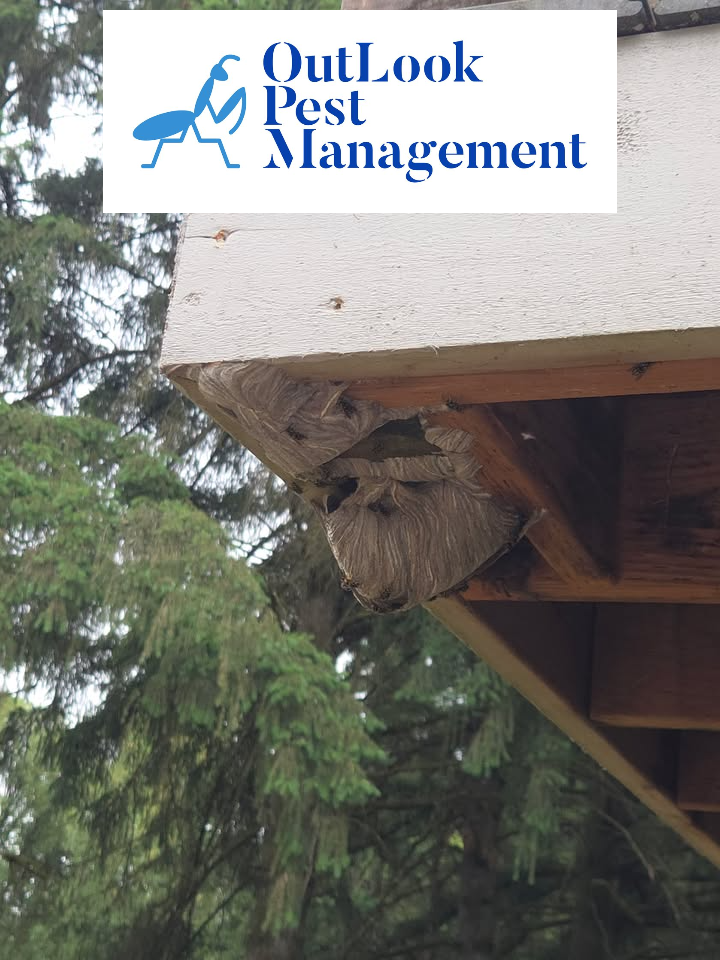
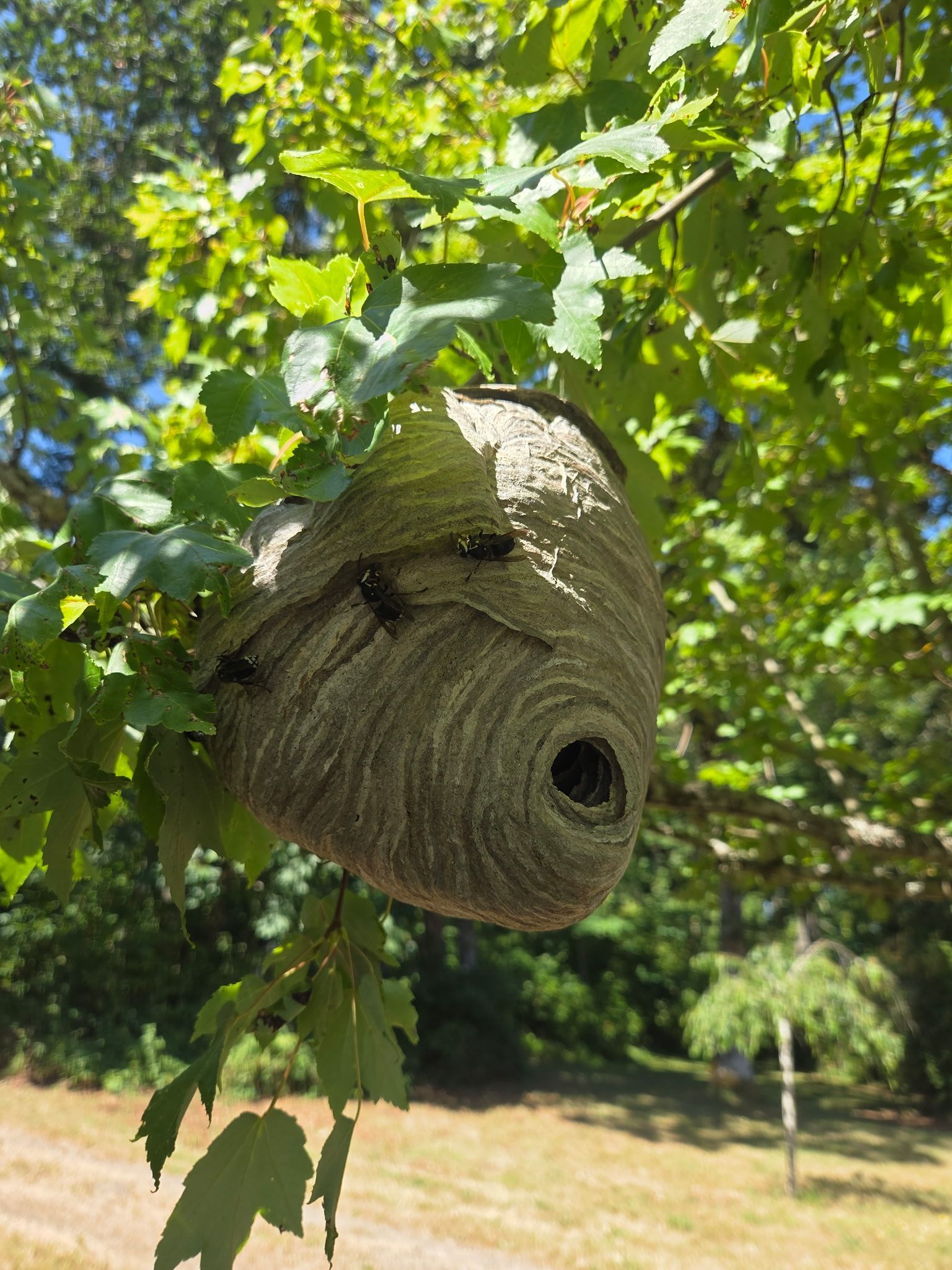
Bald-faced hornets are actually a type of aerial yellowjacket. They build large enclosed gray paper nests that are usually attached to trees, shrubs, building eaves, or other elevated surfaces. They are known for being highly defensive around their nest sites and can respond aggressively if the nest is disturbed. They are easy to recognize by their mostly dark body with white markings.
Breeding Habits & Lifecycle
Stinging insect colonies usually begin with an overwintered queen that survives the winter in a protected location. In spring, the queen emerges, starts a new nest, lays eggs, and raises the first generation of workers. From spring into midsummer, colonies focus heavily on growth, and workers forage for protein sources such as insects to feed developing larvae. By late summer, colony growth slows and workers begin seeking more sugary foods. This seasonal shift is a major reason stinging insects become much more noticeable around people later in the season. Most colonies last for one season, then die off as temperatures drop, while new queens overwinter and restart the cycle the following year.
Yellowjacket colonies can become especially large, sometimes reaching thousands of individuals, depending on species and conditions. Paper wasp colonies are usually much smaller, while bald-faced hornet nests can still become large enough to create serious safety concerns near homes or commercial buildings
Conducive Conditions That Attract Wasps, Yellowjackets & Hornets
Several conditions can make a property more attractive to stinging insects:
Food Sources
Outdoor trash, sugary drinks, pet food, grease, protein scraps, compost, ripe fruit, and food waste can all attract foraging wasps and yellowjackets, especially during late summer and early fall when they are actively searching for sugar.
Shelter & Nesting Areas
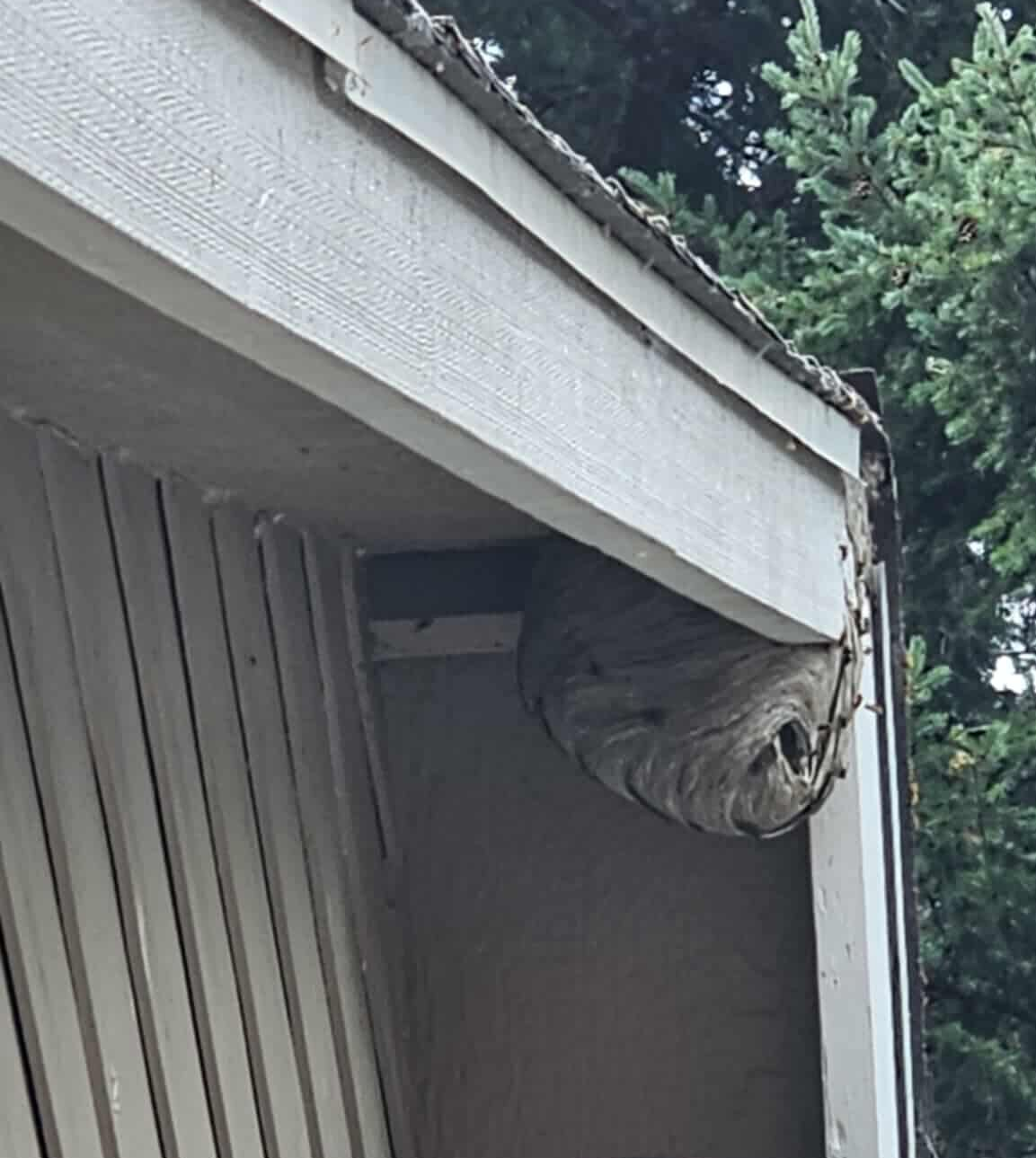
Eaves, soffits, porch ceilings, attics, sheds, fencing, wall voids, crawlspace vents, shrubs, ornamental trees, and abandoned rodent burrows can all provide ideal nesting areas. Yellowjackets especially favor hidden or protected voids, while paper wasps prefer sheltered overhead surfaces. Bald-faced hornets often use trees, shrubs, and elevated structural areas.
Landscaping & Moisture
Dense vegetation, overgrown shrubs, fallen fruit, and undisturbed landscape areas can create attractive harborage and feeding conditions. Properties with poor sanitation, rodent burrows, or repeated food exposure often see more pressure. This is especially true during warmer months in the Portland Metro and Willamette Valley.
Why Stinging Insects Become a Serious Problem
Wasps, yellowjackets, and bald-faced hornets are more than just a nuisance. They can interfere with outdoor living, create hazards around children and pets, and pose a serious risk for anyone sensitive or allergic to stings. Nests around doorways, decks, playgrounds, rooflines, commercial entries, dumpster areas, and outdoor dining spaces can quickly turn into a safety concern. Social wasps can sting repeatedly, and some species become more defensive as colony size increases later in the season.
Peak Season in Oregon
In the Portland Metro and Willamette Valley, stinging insect activity usually becomes more noticeable in spring, builds through early summer, and reaches its peak in summer and early fall. That is when nests are larger, worker populations are highest, and yellowjackets are more likely to show up around food, trash, outdoor gatherings, and structures.
Call OutLook Pest Management for Wasp, Yellowjacket & Hornet Control
If you are seeing increased wasp activity around your home or business, OutLook Pest Management is here to help. We provide stinging insect control in Portland Metro and the Willamette Valley, including treatment options for paper wasps, yellowjackets, and bald-faced hornets. Whether you need a one-time nest treatment or want to set up a maintenance plan, we can help you protect your property during Oregon’s peak stinging insect season.
Stinging Insect Control FAQ
Learn more about wasp, yellowjacket, and bald-faced hornet activity in the Portland Metro and Willamette Valley. OutLook Pest Management provides local stinging insect control for homes and businesses in Canby, Oregon City, Wilsonville, West Linn, Lake Oswego, Tigard, Tualatin, Sherwood, Beaverton, Hillsboro, Newberg, Woodburn, Salem, Keizer, and surrounding Oregon areas.
If you are searching for wasp control in Canby, yellowjacket treatment in Salem, hornet nest removal in Portland, or stinging insect service near Oregon City, this FAQ section helps explain common warning signs, prevention tips, seasonal pest behavior, and when professional pest control may be needed. Our goal is to help residential and commercial customers across the Portland Metro and Willamette Valley better understand stinging insect activity and how to reduce nesting around their property.
What are the most common stinging insects in the Portland Metro and Willamette Valley?
The most common stinging insects we see in the Portland Metro and Willamette Valley are paper wasps, yellowjackets, and bald-faced hornets. These pests often become more active in spring, summer, and early fall, especially around homes, businesses, rooflines, patios, sheds, outdoor eating areas, and landscaped spaces.
When is peak stinging insect season in Oregon?
Peak stinging insect season in Oregon is typically summer through early fall. Colonies grow larger as temperatures warm up, and yellowjackets in particular often become more aggressive later in the season when they start searching for sugary foods, garbage, pet food, and outdoor meals.
What are common signs of stinging insects around a home or business?
Common signs of stinging insect activity include:
- Wasps or yellowjackets flying in and out of the same area repeatedly
- Nests forming under eaves, soffits, patio covers, decks, or rooflines
- Increased insect activity near trash cans, outdoor food, or pet food
- Buzzing or visible traffic near shrubs, trees, fences, or wall voids
- Stinging insects entering gaps in siding, vents, or other structure voids
- Ground-level yellowjacket activity near holes in the soil or landscape beds
Where do wasps, yellowjackets, and bald-faced hornets usually nest?
Paper wasps commonly nest under eaves, porch ceilings, awnings, and sheltered overhangs. Yellowjackets may nest underground, in wall voids, attics, crawlspace areas, or landscape cavities. Bald-faced hornets usually build large aerial paper nests in shrubs, trees, or attached to structures.
Why are yellowjackets such a big problem in late summer and early fall?
Yellowjacket colonies grow throughout the warm season, so by late summer they often have a large worker population. During this time, they become more noticeable around people because they are actively searching for sugary foods, meats, garbage, and other attractants around homes, restaurants, parks, patios, and commercial properties.
What attracts stinging insects to a property?
Stinging insects are attracted to food, shelter, and nesting opportunities. Common attractants include:
- Open garbage or recycling bins
- Sugary drinks and food spills
- Pet food left outdoors
- Fallen fruit from trees
- Dense shrubs and overgrown landscaping
- Gaps, voids, and protected overhangs for nesting
- Undisturbed areas around sheds, fences, and rooflines
What prevention tips can help homeowners reduce stinging insect activity?
Helpful prevention tips for homeowners include:
- Keep garbage lids tightly closed
- Clean outdoor dining and barbecue areas regularly
- Remove fallen fruit from the yard
- Limit pet food left outside
- Check eaves, sheds, porch ceilings, and play structures for early nest activity
- Seal gaps and openings where practical
- Trim back overgrown shrubs and vegetation near the home
What prevention tips can help businesses reduce wasp and yellowjacket problems?
Helpful prevention tips for businesses include:
- Keep dumpster lids closed and clean surrounding areas often
- Reduce food and beverage residue around entryways and outdoor seating
- Inspect rooflines, signage, awnings, and service areas for nest activity
- Address landscape harborage and overgrown vegetation
- Maintain routine pest control service during peak season
- Monitor high-traffic areas where guests, customers, or staff may be exposed
Do stinging insects come back to the same area every year?
While most stinging insect colonies do not reuse the same nest year after year, new queens may return to the same favorable areas if conditions are right. Properties with sheltered overhangs, food sources, and ideal nesting spots often experience repeat activity each season.
Are wasps, yellowjackets, and bald-faced hornets dangerous?
They can be. These stinging insects may become defensive when nests are disturbed, and some can sting multiple times. For people with sting sensitivities or allergies, activity around a home or business can become a serious safety concern. This is especially important around entryways, play areas, patios, outdoor workspaces, and customer-facing commercial properties.
Does OutLook Pest Management offer one-time stinging insect service?
Yes. OutLook Pest Management offers one-time stinging insect service for active nests and problem areas around homes and businesses. This can be a good option for visible nest activity, urgent problem spots, and seasonal pest flare-ups.
Do you offer ongoing maintenance service for wasps and yellowjackets?
Yes. We also offer maintenance service options for customers who want seasonal protection and help reducing repeat stinging insect activity. Ongoing pest control service can be especially helpful for properties in Canby, Salem, Portland, Oregon City, Wilsonville, West Linn, Beaverton, Hillsboro, Tigard, Tualatin, and nearby Oregon communities where annual activity is common.
Do you service both residential and commercial properties?
Yes. OutLook Pest Management provides stinging insect control for both residential and commercial properties throughout the Portland Metro and Willamette Valley. We help homeowners, property managers, restaurants, offices, retail spaces, and other businesses address wasps, yellowjackets, and hornet activity.
What areas do you serve for stinging insect control?
We serve the Portland Metro and Willamette Valley, including Canby, Oregon City, Portland, Wilsonville, West Linn, Lake Oswego, Tigard, Tualatin, Sherwood, Beaverton, Hillsboro, Newberg, Woodburn, Salem, Keizer, Albany, Dallas, Independence, McMinnville, and surrounding Oregon communities.
Why choose a local Oregon pest control company for wasp and yellowjacket service?
A local company understands the seasonal pest pressures, climate, and nesting trends common to the Portland Metro and Willamette Valley. OutLook Pest Management provides local service backed by regional experience, helping customers with practical treatment options for Oregon stinging insect activity.
Local Stinging Insect Control in Oregon
OutLook Pest Management provides wasp control, yellowjacket treatment, and bald-faced hornet service throughout the Portland Metro and Willamette Valley. Whether you need stinging insect control in Canby, Salem, Portland, Oregon City, Wilsonville, West Linn, Beaverton, Hillsboro, Tigard, Tualatin, Sherwood, Newberg, Woodburn, or nearby Oregon communities, our services are designed to help reduce active nests and seasonal pest pressure around homes and businesses.